
AVID ARTIST
SUSAN VAILL, ACE
“I wish more people understood the impact of editing on what you're watching.”
EMMY® NOMINATED FOR:
Hacks, “I Love LA”
CATEGORY:
Outstanding Picture Editing (Single Camera) for a Comedy Series
AVID PRODUCTS USED:
Media Composer
FAVORITE AVID TOOLS:
FluidMorph, Smart Tool, Trim Mode, Phantom Marks, ScriptSync
The Art of Montage
One of the most amazing creative challenges in every season are montages. The art of montage is at its height in Hacks. Producers, writers, directors love it. If you get a montage scripted in an episode, it's not going to be eight shots, and you figure out the camera moves. It's eight days of shooting for that montage to play for maybe one minute. It's a tough assignment because you have to find the right music, go through hours of footage shot all documentary and floating all over the place.
This episode opened with this crazy montage about the work it takes to create a show. They wanted to pay tribute to the crews they've been working with. It had their real construction crew building sets, the wig maker building Deborah Vance's wig, the seamstresses and tailors cutting fabric for costumes and curtains, how a writers room works and gets set up, the PA’s (production assistants) who bring in giant bags of lunch every day. But also, the important stories of Hannah Einbinder, who plays Ava, and Deborah Vance's (Jean Smart) journey.
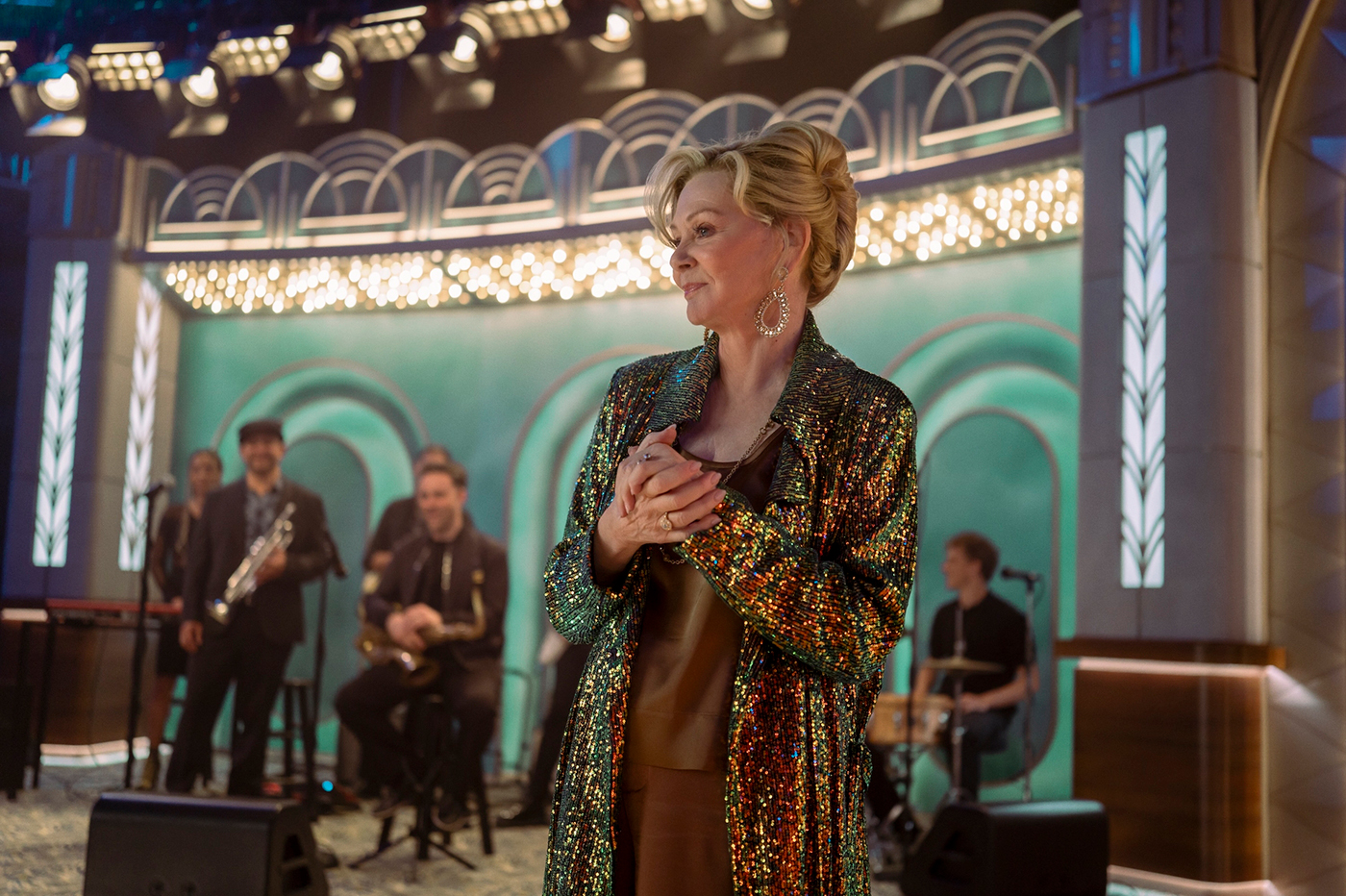
Deborah Vance (Jean Smart) in Hacks: I Love LA
Secret Sauce of Comedy Editing
The montage was scripted out in shooting order but was not meant to be cut in shooting order. It gave you each scene: the construction, wig room, breakfast, Eva's office, the writer's room. I start pulling from my select reels and finding shots that feel like there's continuous motion, things that feel good, exciting and work with the dynamics of the song. You always start with way more than you need. You cut it down and fine tune it to each song you try. We eventually landed on Queen's “Breakthru,” a thematically wonderful choice.
Important in any comedy is timing. One secret sauce, special, amazing tool for that is FluidMorph, in the illusion effects subset of the video transitions menu, the special effects palette. Fluid Morph enables you to tighten a gap. You don't have to cut. It creates an invisible cut. You could lift a 10 frame pause you don't want. You want the dialogue to move, ratatat, a little faster, but you don't want to cut away. If the actor pauses, you can lift that pause, then FluidMorph puts a two to four frame dissolve over it, stitches it together seamlessly, and that makes your shot move faster.
Avid makes it elegant and has always made me feel like I can tap into subtlety quickly. Other editing platforms I've tried make me feel like I'm editing with my fists. There's something about Avid that feels beautiful and reminds me that I'm an artist. Maybe it's because I can lay out shortcuts on my keyboard so there’s muscle memory. I don't even use a strip of notes to remind me which function key is which preset. I just know it. I'm able to keep my eyes looking forward on the story and picture and not on the keyboard. I'm able to do things on the fly. And that's where ideas come from.
One of my favorite newer tools in Avid is the Smart Tool, a very intuitive innovation. It's also customizable. Another sign of Avid being friendly and understanding that every editor has different needs. It combines the yellow and red arrows. You roll over a cut point and it switches right into Trim Mode, the secret life blood of what is amazing about Avid. You are able to work with subtlety, fine tune and make changes that are just one or two frames of a difference.
I don't know what we would do without markers, a simple yet critical tool. You can make notes right on the cut, talk to your assistant or visual effects editor without having to call and text.
I love Phantom Marks, a hidden tool inside the Avid settings. It creates in and out marks that mirror in and out marks on the other side. Phantom Marks and the replace arrow I use to edit faster, especially when I'm under pressure and there's a director or showrunner in the room.
ScriptSync is important in comedy because it is about the most incremental differences between lines, between words. You need to know every single line with maybe one word difference. You can type those alts into the script. That's the kind of thing showrunners and directors want to see quickly. They want to know, was there any alt? Which take is the one that's exactly as written? ScriptSync makes that happen.
Finding Inspiration in Other Editors’ Work
Getting nominated this year was a huge surprise. It is so moving to me that people love it. It tells a story of feminism, hard work and discipline. Yet it's funny, smart, intelligent and interesting. It was wonderful to get to tell that story as a woman editor, as someone who loves comedy. I have gratitude for the recognition of the work and impact it had on people who watched.
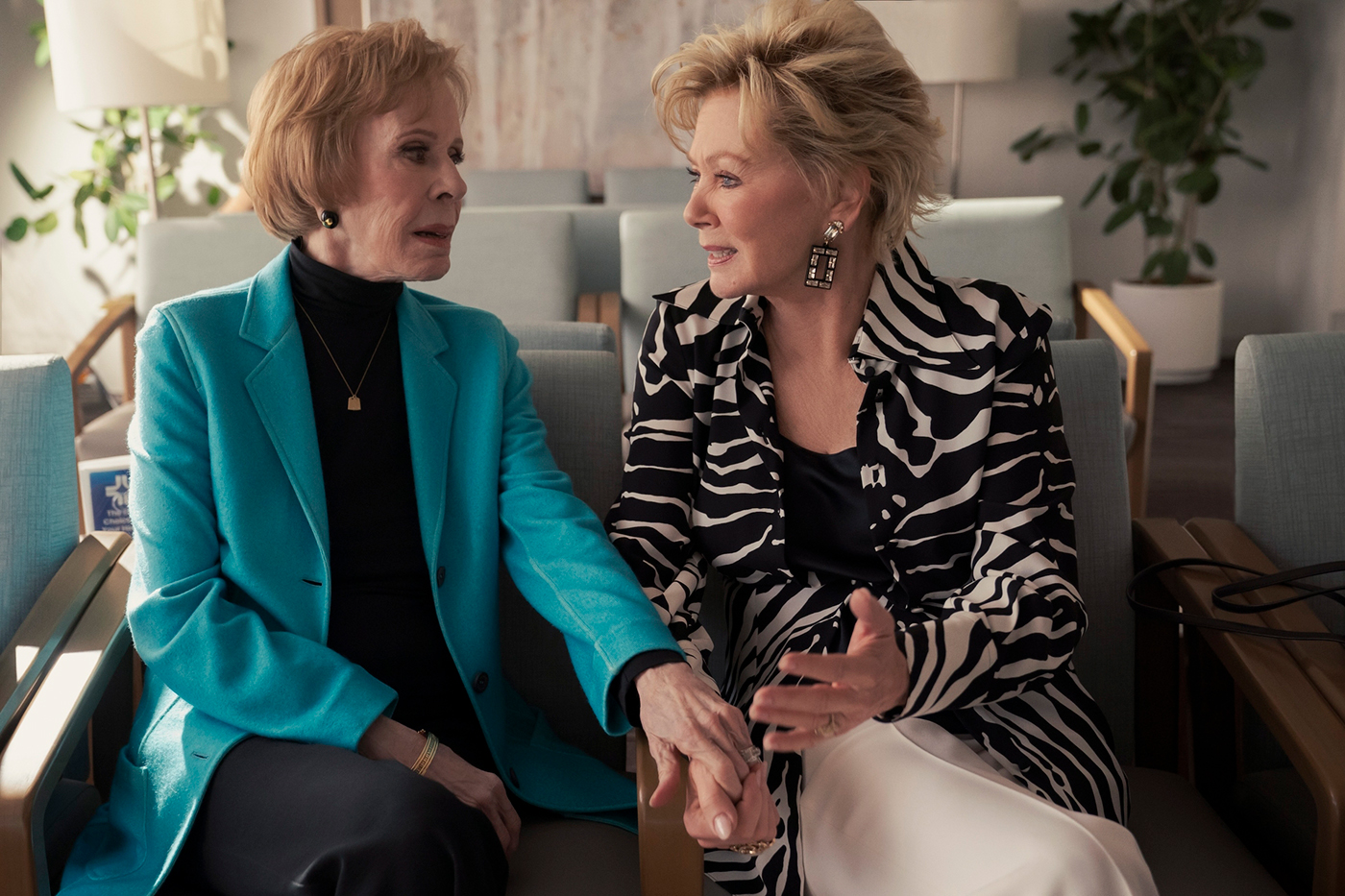
Carol Burnett and Deborah Vance (Jean Smart) in Hacks: I Love LA.
In my early years as an editor, I had almost no examples of other female editors whose work I could admire. However, there was Sally Menke, editor of Pulp Fiction and Reservoir Dogs. Sally Menke's editing blew my mind. Her use of music, style, rhythm, dynamism, fearlessness in her editing, is incredible. Her body of work was remarkable. I recently started to learn more about other editors. I was listening to a podcast about great movies from the 70s. Breaking Away, this terrific cycling movie with Dennis Quaid, set to a lot of opera. I had no idea it was edited by a woman, Cynthia Scheider. She worked on The Taking of Pelham 123 and awesome 70s movies. I did research on Blanche Sewell, who many people don't know. She cut a little movie called The Wizard of Oz. She was a pretty legendary editor. There are amazing missing pieces in the history of film editing that I am enjoying uncovering.
The Lean Forward Moment
I love editing. I love putting everything together. I love that there's infinite ways of doing things. It's a remarkable experience. I wish more people understood the impact of editing on what you're watching. We do our job well. It's so seamless that people don't realize there's somebody making decisions about every shot and thing you're hearing.
I don't think you can learn editing without knowing Media Composer. Avid is the tool that 99% of the industry is made with. It's not just a tool. It's an artist medium. Every person that says, ‘I might want to be an editor,’ I say, ‘You've got to learn Avid.’
I have a personal philosophy about editing. It comes from this concept called the “Lean Forward Moment,” which a wonderful editing guru, Norman Hollyn, ACE, who used to teach editing at USC, would ask editors what inspired them, what made them lean forward when watching something and notice the editing. I think about the Lean Forward Moment for the audience, especially in the opening sequence or first act of a movie or show. It is actually a Lean Back Moment where the audience relaxes, they realize they are in good hands, that you're taking them on a journey, and it's going to be fun, well told, or beautiful to listen to or watch. You have to lead the audience to that moment. Once you've hit that moment, you have them. They're not going to change the channel. If you spend the most time anywhere, it's got to be on the opening because that's what's going to make people keep watching. I look for those chances, whether it's an extra robust sound design, adding reverb, a tiny whoosh on someone turning that drives the meaning of the moment deeper. That gets the audience to invest in the characters, in the storytelling and want to find out what happens. That's gotten me a lot of jobs.
The Path to Comedy Editing
Research people whose work you admire. Look for connections you have to them. Let them know you've seen their work. Write them a thank you note. Recap a point you heard. People want to be listened to if they're going to share their time with you.
I wish I had taken improv classes. Comedy editing is tough to break into. Comedy writers have rigorous training in comedy writing and improv. They have experience onstage, in front of the camera as well as writing. If you go into improv, you'll meet collaborators, learn to write those scenes, and understand what's important to writers if you want to edit those scenes. That will get you one step ahead of other editors learning on the job.
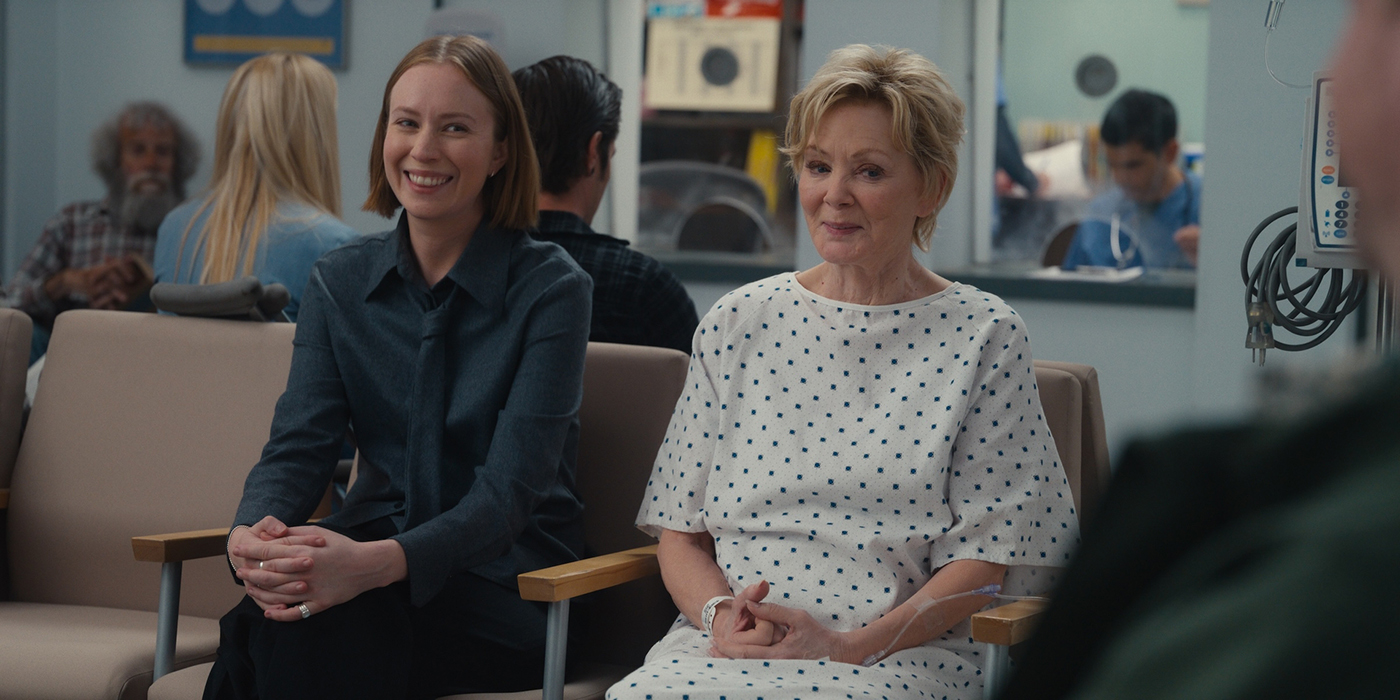
Ava Daniels (Hannah Einbinder) and Deborah Vance (Jean Smart) in Hacks: I Love LA.
About the Editor
Susan Vaill, ACE, is an acclaimed television editor, director, and producer whose storytelling craft has helped shape some of the most beloved series in modern television. A graduate of USC’s School of Cinematic Arts, Vaill began her career editing documentaries before moving into scripted television, where her keen sense of pacing, emotional nuance, and character development quickly set her apart. She is best known for her long-running work on Grey’s Anatomy, where she edited more than 70 episodes and also stepped into the director’s chair, as well as her editorial contributions to This Is Us, Hacks, Abbott Elementary, Quiz Lady and Space Force. Vaill’s editorial style blends technical precision with deep empathy for characters, allowing her to deliver emotionally resonant narratives that connect with audiences worldwide. A member of American Cinema Editors, she is an advocate for mentorship and diversity in post production, sharing her experience and championing new voices in the industry.

Email Preferences | © 2026 Avid Technology, Inc. | Terms & Legal | Privacy


