
AVID ARTIST
SCOTT TURNER
“You don't know what you're looking for until you've got everything laid out and then things reveal themselves.”
EMMY® NOMINATED FOR:
The White Lotus, “Amor Fati”
CATEGORY:
Outstanding Picture Editing for a Drama Series
AVID PRODUCTS USED:
Media Composer
Animatte, FluidMorph, ScriptSync, VFX Tools
Mastering the Drama and Comedy Dance
There were two scenes we kept coming back to. The first one is when Piper tells her parents she can't stay in Thailand. It’s a big dramatic reveal so we had to find the exact triangulation but also the deep comedy of it, where Victoria is getting her victory, and Tim is in agony. We needed to find that perfect balance of a little too funny, a little too slow, a little too fast. We did versions many times.
Another sequence I worked on that Mike (White, director) kept pressing on the drama, and I think it came out great, is when Laurie tells her friends she actually loves them.
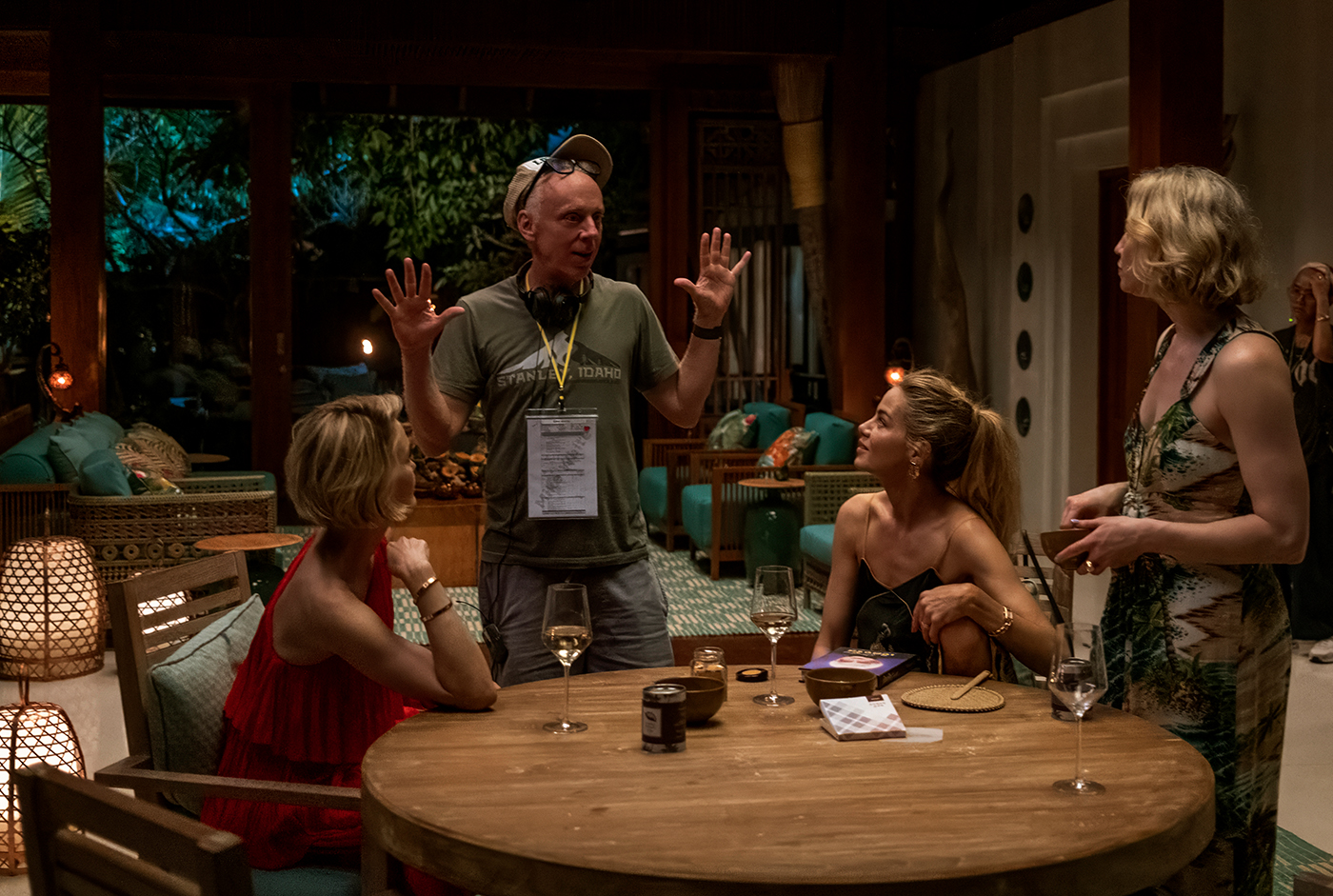
Mike White (Director, Writer and Creator) on set with actors Leslie Bibb, Michelle Monaghan and Carrie Coon
We had to get across the sincerity in that. Carrie Coon is this amazing performer, and you have these wonderful reaction shots from Leslie (Bibb) and Michelle (Monaghan), but what's the right amount? Is it most interesting in a monologue to stay on that person and be absorbed as if you are watching? Or do we need to check in with reactions, to clock how it's landing, how it's going to evolve? Those two scenes Mike kept saying, give it another run, keep pushing, keep pushing. I'm proud of where we ended up on those.
The Art of Precision Editing
The scenes evolve greatly from the first cuts when everything's stuffed in there and you get to a point where you can lift some lines and adjust blocking or scene order and figure out your flow.
Both scenes were working, but it's amazing how the last little degree is all the difference. Tiny adjustments in Victoria's facial reactions got a huge laugh now, or spacing them out in just the right way, so you escalate the story.
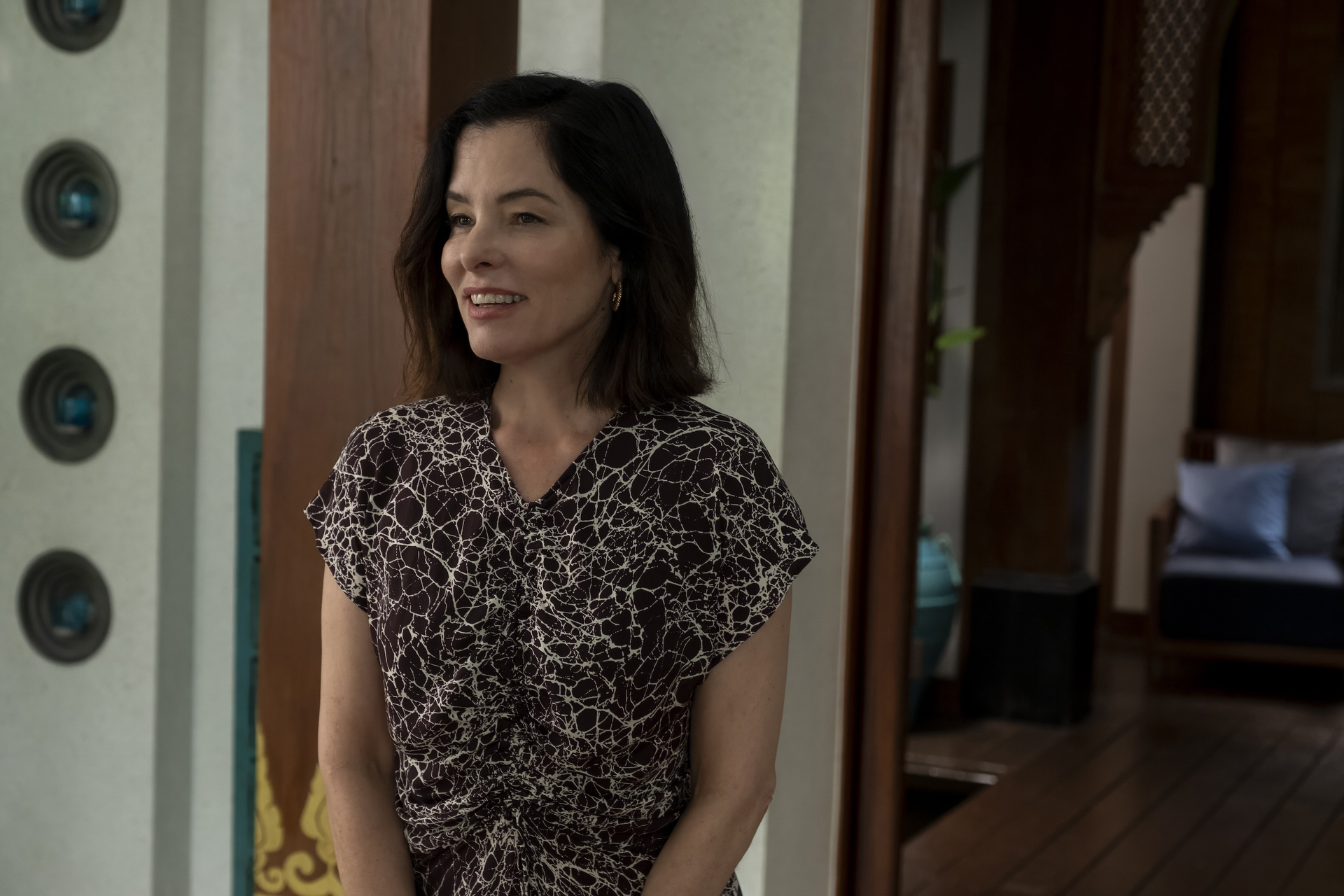
Victoria Ratliff (Parker Posey) in The White Lotus
I always start cutting dailies by rereading the script and reminding myself in the action lines what is Mike telling me he wants out of the scene. How he shot it is another clue as to how he wants it to play. Refine away anything that's not helping sell that central moment.
You're searching to make the act, to understand what the actors are trying to tell you. What is their motivation? You don't know what you're looking for until you've got everything laid out and then things reveal themselves.
It was hours and hours of the most gorgeous footage you've ever seen and there's this process of watching episodes and trying to find where the puzzle pieces fit to create bridges and a vibe. Media Composer is great at organizing all that footage. I would enjoy watching stringouts. Between marking things up and finding things we got good at swapping sequences, sending all sun shots, sunrises, lily pads, seeing them laid out and being able to swap bins constantly. There's no way we could have done the show without being able to share that much footage that quickly. We used ScriptSync, FluidMorph, I’m always using Animatte to split frames for actors’ performances. Avid's built in temp visual effects tool (VFX) is something we were constantly going to.
The Power of Collaboration
I've never been nominated for an Emmy or any award. The show is deeply special to me, my career, my life. It aligns with my sense of taste and what I'm trying to do as an editor. The nomination puts it over the top. I feel gratitude.
Since receiving the nomination I've gotten lovely well wishes from people and peers that I respect. I feel included among other wonderful editors doing great work.
I'm constantly showing every version of a scene to an assistant even if they're not taking it to do notes on their own or make edits. I want their feedback. Having an assistant cut scenes and screening together as a team even before you show the director is critical because you're maybe sick of seeing the footage or all you see is problems and then this ally next to you is like, ‘That rocks’ or ‘Yeah, I agree, we need to get in there and fix the scene.’ It's much less lonely to have another person there. I've been rewarded by including people because I benefit from their work and mind.
On Becoming an Editor
My dad is an acting teacher, and my mom was a travel writer and editor. It was a liberal arts household, and we would watch foreign movies. I absorbed my environment. We got a Macintosh in the house before it was cool and it had iMovie. That was the entry point.
I came out to Los Angeles with an internship through UNC Chapel Hill. Everyone else who came wanted to be an actor, writer or director. I was the one guy who said, ‘I want to be an editor’ and I think it helped distinguish me because if you have a technical skill you can help out with people's projects.
Seeing that Avid was what everyone was using and wanting to become an assistant editor and get into the union, it became, ‘Okay, I’ve got to learn this.” I worked in reality television with a friend who got me a gig as a nighttime assistant editor logging footage and bringing in tapes and I learned Avid on the job.
Finding the Rhythm in a Scene
Early in my career I learned from an editor one way to approach a scene in terms of exploring rhythm. Turn off the audio. Watch from a picture perspective. Then do the opposite. Listen to the audio. His pitch was that both modes should work. You should be able to tell the story visually and, depending on the scene, tell the story just with audio. Especially when you turn the audio off, you immediately see where your rhythms are clicking or where you're relying on the rhythm of a line to put a cut together that's shaky. That's a great way to freshen your perspective when you feel like you're stuck in a scene.
Be interested in everyone you interact with. Every job I've had, there's something to learn from everybody and you start to fill in the pieces of who's doing what and it's not all just about how fast can I be editing because you need to see the whole picture.
Find editing you respond to because when you start doing dailies or going through a cut and engaging with directors and producers, the common ground you'll find is over the art you're engaged with, either then or before, maybe work that they've done. Editors succeed when they're interested in talking about art as artists and as fans.
About the Editor
Scott Turner grew up in Chapel Hill, North Carolina, raised by a father who taught theater actors and showed him classic movies and a mother who wrote books and let him rent Star Wars too many times. Starting in middle school he spent weekends filming friends’ comedy sketches with a home movie camera and discovered that the best part was editing everything together on the family computer. While a student at UNC Chapel Hill, it dawned on him that he should study something he enjoyed — why not try editing? He’s grateful to the UNC Hollywood internship program for accepting him and helping him begin his career in Los Angeles. His first industry job was watching movies and TV for a quality control company, followed by driving his Prius around L.A. grabbing coffee and delivering hard drives as a post PA. With YouTube in its infancy, he moonlighted as an editor for every project that would have him, eventually joining the Editors Guild. He was fortunate to learn by assisting excellent editors and is thankful for post teams that gave him his first editing opportunities. He most recently cut on the action thriller, The Terminal List and is honored to be nominated along with John Valerio for their work on the dramedy, The White Lotus.

Email Preferences | © 2026 Avid Technology, Inc. | Terms & Legal | Privacy


