
AVID ARTIST
BRIAN LeCOZ
“I really appreciate the Avid's ability to custom map the keyboard. That's important for efficiency.”
EMMY® NOMINATED FOR:
The Upshaws, “Buy Now”
CATEGORY:
Outstanding Picture Editing for a Comedy Series
AVID PRODUCTS USED:
Media Composer
FAVORITE AVID TOOLS:
VFX, ScriptSync, AudioSuite
A Season Finale Challenge
For this episode, it was the last one of the season, and we had this big emotional scene between the characters Benny and Lucretia, played by Mike Epps and Wanda Sykes, where they resolve a lot of their differences, and that turned out well. But at the end, there was this gag where there was supposed to be a creature in a garbage bag but there wasn't enough movement of the bag, so the scene wasn't working. We're trying to make it work, discussing whether to use VFX, and finally, we cut around it a little, minimized it a bit, and went over the top with sound design, and that allowed the scene to work, and you didn't miss the visuals because there was so much going on with squeaks, rattles and strange sounds.
The biggest technical hurdle was last minute our audience got canceled, so we didn't have studio laughs we normally have. We had to create them from scratch, and that's a lot more work making them sound authentic. Sometimes the audience has a big reaction to something on paper, or that you didn't think would land as well, and they absolutely love it, and so you're like, ‘Okay, we're going to have the big laugh there.’ That's a good indicator of where you're at, and maybe this part of the edit needs more work, because the joke didn't quite land.
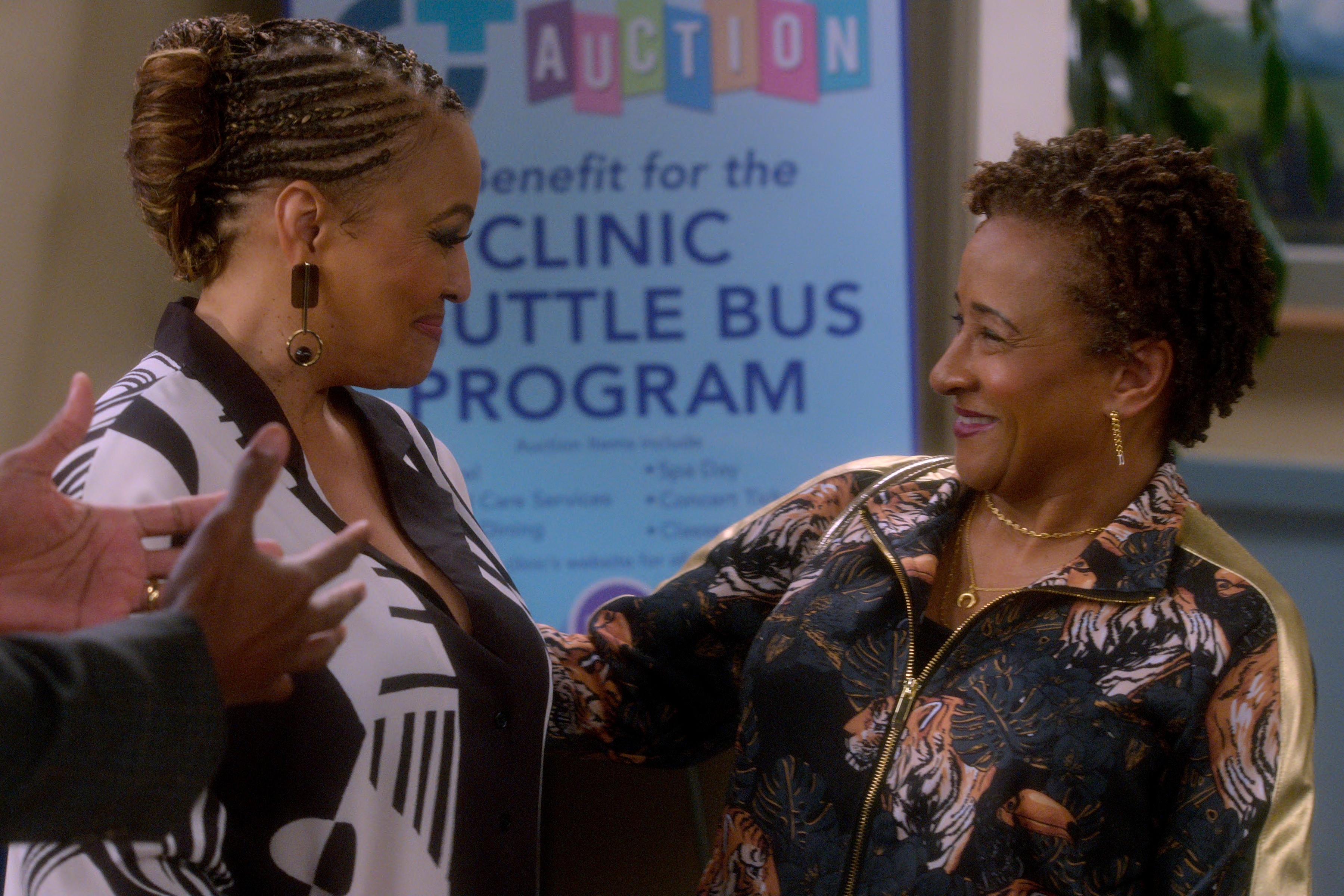
Regina Upshaw (Kim Fields) and Lucretia Turner (Wanda Sykes) in The Upshaws.
The Editing Must Have
I really appreciate the Avid's ability to custom map the keyboard. That's important for efficiency. I have different versions of keyboard maps depending on what I'm doing. If I'm purely editing, I have an editing preset. If I'm working on VFX, it allows a VFX preset. Maybe you blow up the windows more and have your editing, your effects palette out. If I'm working on VFX, it allows you to have a VFX palette out and maybe increase the size of the VFX window. If I'm working on audio, I like to increase the size of the timeline so I can see sample plots. I really appreciate the customizability of the Avid.
It's the standard for a reason. It has all the tools we need. It allows seamless workflows. We can seamlessly integrate with online, with offline. The bin sharing between assistants and editors is important and always works. My favorite is script-based editing (ScriptSync). It revolutionized things when it came onto the scene and is a requirement now with the time savings and efficiency it provides. It saves time for producers and directors we work with. If they want to see takes, we have them at our fingertips. You can tell them exactly how many take reads there are. You can play them for them one after the other. They can decide to make a change right then. Doing notes for network and studio is much quicker. It allows more time spent in the edit, and less time searching. It allows us to turn out a better product more quickly.
Working with a Show Dream Team
Our cast and crew are amazing. The episodes turn out very funny and are well done. It was like working with a family. We became very close, and it was one of those special projects where you really miss the people. I feel fortunate to have worked on this show.
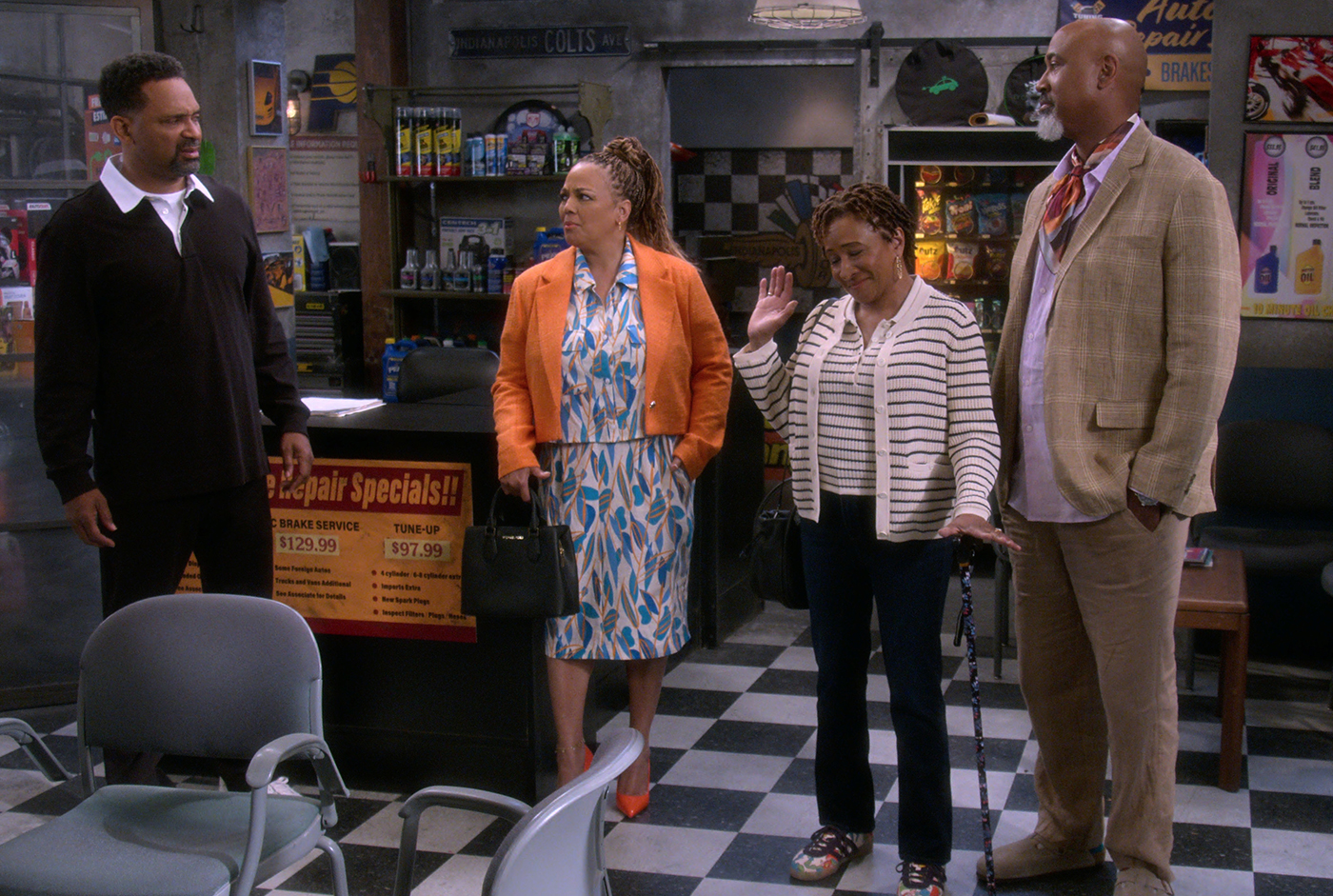
The cast of The Upshaws
The nomination was a surprise. Angel told me she was putting our names in for a nomination but I didn't think anything of it until we were nominated. I was nominated last year, and my parents got to see me nominated before they passed away, and that was really special.
What sets apart our editing work on this show is the material. We're given amazing scripts, they're executed well by the crew, and our cast is amazing. The editing is the easy part, and I feel privileged to do it. You're choosing the best takes and not doing damage control. It's been great.
Getting into the Editing Chair
I started as a footage logger in reality television a long time ago. I saw how they crafted shows in editorial. That was inspirational and when I decided to be an editor. I first started using Media Composer on a tape vault logging job, my first job after footage logger. We were keeping track of tapes and interfacing with assistant editors. It was efficient, easy to use and intuitive. I was like, ‘This is great software.’ Everyone told me if you want to edit, learn this software.
I like a lot of things about being an editor. Most of all is crafting the story. It's like putting a puzzle together. Sometimes the pieces don't quite fit, but you have to find a way to make them fit. You have your script as your key and what you're trying to make this puzzle look like.
Mentorship's very important in this industry. None of us would be where we are without our mentors. I try to pay that forward. On The Upshaws, our PA was interested in editorial so we were sitting her in front of the Avid and showing her our process from ingestion to scripting. She saw, this is how we use script-based editing, this is why it's important. That really helps people to see this is the path I want to follow. I did the same with my assistant. We have some free time. How about let's cut some scenes. I can give you some notes. You can get better at editing. And one day you can be in the editing chair.
Finding and Keeping an Editing Job
To get a job in the industry, it's absolutely necessary to know Avid. It's been the industry standard for 40 plus years now. Broadcast television, every show, every film I've worked on for the past 25 years has used Avid. It's the one to know. That's where the jobs are, what everyone knows how to use, what the finishing houses know how to interface with, the online house is comfortable getting the turnover from Avid, the mix house is comfortable getting the turnover from Avid, the VFX company is comfortable with the turnover from Avid, and it's very important. It saves a lot of time, it saves a lot of money.
Networking is imperative in this business. It's been shocking to me how small this world is. People you worked with, you'll run into them again, so be nice. Take on projects for your career, but also smaller projects just for the sake of doing them. If you're a sci-fi fan, do a little sci-fi project and maybe you don't get paid much, but it was a good experience and you learned something. I did a little horror show for reality TV and it was a lot of fun doing the sound design and it turned out to bea great experience.
About the Editor
Brian LeCoz is a two-time Emmy-nominated editor from Whittier, California with over two decades of experience in film and television. His career began with logging and transcribing reality television shows, working in tape vaults, and up-rezzing DigiBeta tapes. His first primetime broadcast editorial role was on ABC’s Samantha Who? in 2007, launching a remarkable career in single and multi-camera television comedy for networks and studios including CBS, ABC, NBC, Fox, Sony, Warner Bros, and Netflix, among others. LeCoz is thrilled to be nominated again for his work on The Upshaws along with his colleague and mentor, Angel Gamboa Bryant. He credits the exceptional cast and crew whose outstanding work made this nomination possible.

Email Preferences | © 2026 Avid Technology, Inc. | Terms & Legal | Privacy


